
Wedding Heels: 9 Tips for Comfortable Wedding Shoes
My cousin cried at her own wedding not during the…
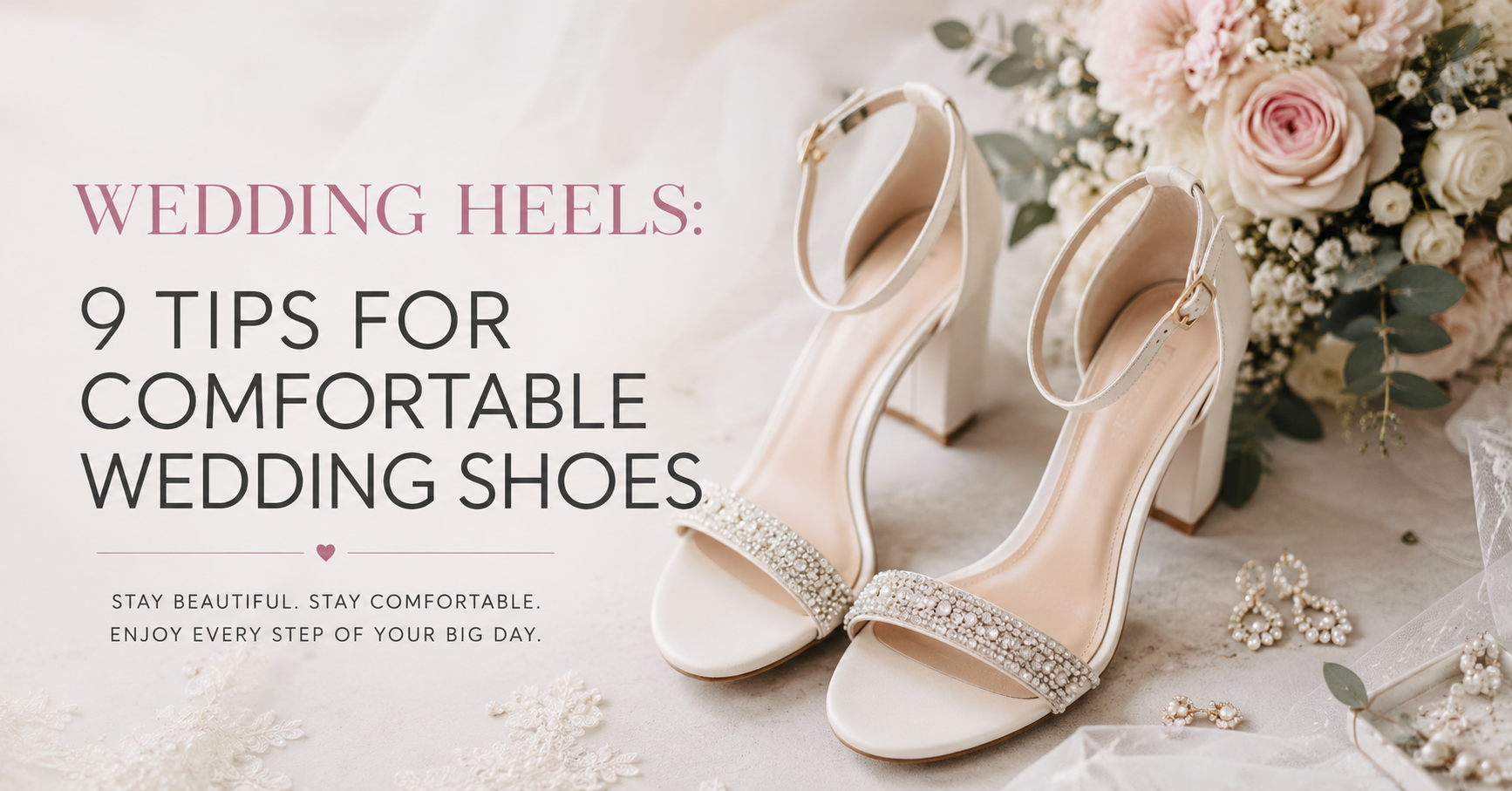
My cousin cried at her own wedding not during the vows, during the reception. Her feet gave out around hour four, and she spent the last two hours of her own party barefoot on a sticky dance floor, holding her shoes like evidence in a trial. That’s the image that sticks with me every time someone asks for shoe advice. Beautiful shoes that hurt aren’t beautiful. They’re just expensive regret.
Here’s what actually works, tip by tip.
1. Start With How You’ll Actually Stand and Walk
Before you fall for a shoe, think about your day. A photo-heavy ceremony with a long aisle needs something stable. A reception with three hours of dancing needs cushioning more than height. Write down your actual schedule — ceremony, photos, cocktail hour, dinner, dancing — and match the shoe to the hardest part, not the prettiest part.
2. Get Measured Late in the Day
Feet swell. Not a little — sometimes half a size by evening, more if it’s hot or you’re on your feet a lot in the weeks before. Get fitted in the afternoon, walk the store floor for a few minutes, and trust the fit that feels fine after five minutes, not the one that felt fine standing still for five seconds.
3. Pick Your Heel Shape Before the Heel Height
Everyone obsesses over inches. Wrong focus. A 3-inch block heel is more stable than a 2-inch stiletto. Thin heels concentrate your whole body weight onto a point smaller than a coin — that’s exhausting fast, and it sinks into grass, gravel, or gaps in old church floors. Block heels, cone heels, and wedges spread the load. Choose the shape first, then adjust height to taste.
4. Test the Sole, Not Just the Upper
Flip the shoe over before you buy it. A stiff, thin sole with no padding will punish your feet regardless of how soft the leather feels on top. Look for cushioned insoles, some flex in the sole, and — if you can find it — memory foam or gel inserts built in. If the shoe doesn’t have it, buy a thin insert separately. It’s a five-dollar fix for a problem that otherwise costs you the whole evening.
5. Match the Shoe to the Ground You’ll Be Walking On
A barn wedding, a beach ceremony, a cobblestone courtyard — each one eats heels alive. Thin heels sink into grass and dirt, slide on smooth stone, and catch in gaps. If your venue isn’t flat, hard, indoor flooring, go wider at the base. Wedges and block heels handle uneven ground without turning your ankle every ten steps. Some brides even keep heel stoppers — small rubber caps — in their bag for exactly this reason.
6. Break Them In the Boring Way
New shoes, worn for the first time on the wedding day, are a gamble. Wear them at home. Twenty minutes the first day, walking around the kitchen, up and down stairs. Add ten minutes every few days. By the time the wedding arrives, the leather has softened around your foot’s actual shape instead of its factory shape. Three to four weeks is enough for most shoes. Give yourself that runway.
7. Pack a Backup Pair
This one gets skipped constantly, and it shouldn’t. Somewhere between the ceremony and the last dance, most brides swap shoes — into flats, sandals, even sneakers under the dress for the dance floor. It’s not giving up on style. It’s knowing when the job of “looking elegant standing still” is done and the job of “moving for three hours” starts. Keep the backup pair in the same color family so the switch doesn’t clash with photos.
8. Don’t Ignore the Strap
An ankle strap changes everything. It locks the shoe to your foot so your toes stop gripping to keep it on — which is the real reason strapless heels start hurting halfway through the night. If your dress hides your ankles anyway, there’s no downside to adding the strap. If it shows, look for a thin strap in a matching or nude tone so it blends rather than competes with the shoe.
9. Try Them On With the Dress
Heel height changes hemline length, and hemline length changes how you walk. Bring the actual dress — or at least a dress of similar length — to your final shoe fitting. Walk in both together. What feels right with jeans can feel completely wrong under six yards of fabric, especially on stairs or during a first dance where your partner might step near your feet.
What to Do Now
Pick your top three shoe candidates using tip 3 and tip 4 first shape and sole matter more than brand or heel height. Buy them a month out, not a week out, so tip 6 actually has time to work. And whatever you choose, pack the backup pair. Nobody has ever regretted bringing comfortable shoes to their own wedding. Plenty of brides have regretted not bringing them.
FAQ — Wedding Shoes